Secret Spot
Named for a hidden ridge at about 40M, divers head out over this and can catch a glimpse of large sharks, rays, and other fish swimming up from the ocean's depths. Continue on a nice drift dive along a reef covered with sea whips, fans, and nudibranchs. Divers here always have a good chance of seeing some spotted eagle rays who swim along the passage here.
Grand
Central Station
If its underwater
action you need then this is the place. The
most north-western tip
of the Gizo islands is the merge point for oceanic
currents and it's here where the fishlife, big
and small, is at it's best. In the big currents the waters are
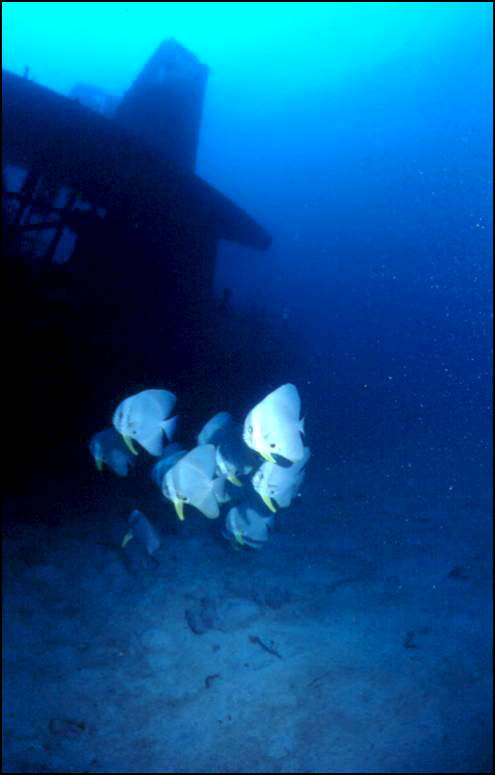
patrolled by sharks, trevally and batfish. A
relatively easy dive for all levels of experience
and there is no need to go deep to see all the
activity. This site is known for having the second highest fish count in the world, with over 270 different species of fish identified in a single tank dive! The dive starts after lunch on Njari Island, starting just 20 M off the shore, making it easy access for both snorklers and divers.
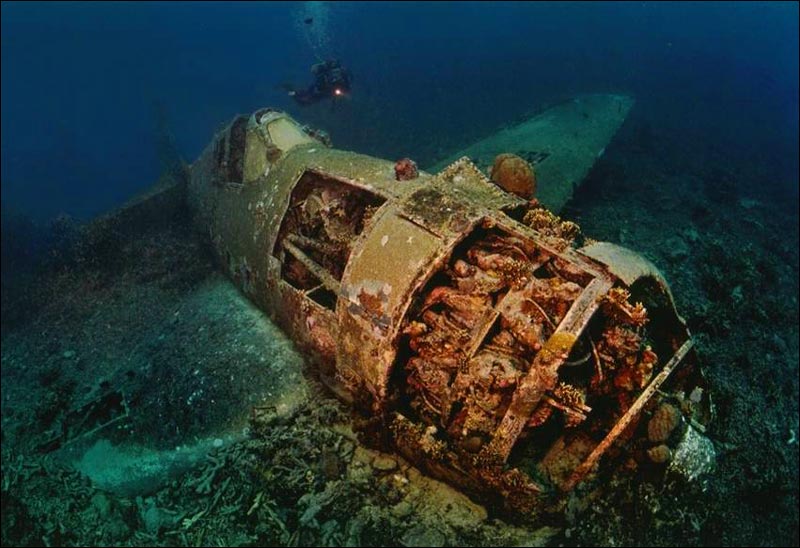
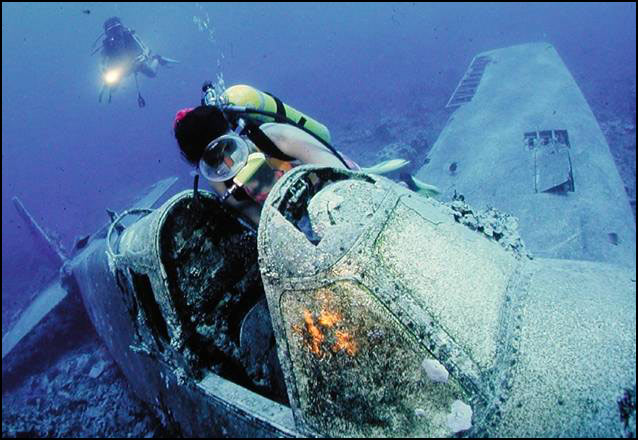
American Hellcat
Fighter Plane
The plane is completely intact
and lying in ten metres of water. A comprehensive
history of the plane is available
and the dive is high on the list for underwater photographers. This plane is one of the most photogenic in the area, and lies in a shallow lagoon allowing plenty of light. Both snorklers and divers will be delighted by a visit here. This is usually a complimentary dive when booking multiple days of diving.
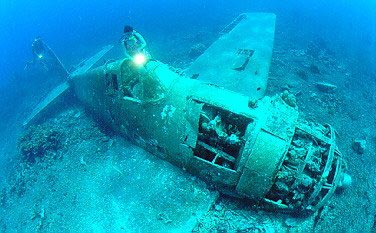 Top
view of the American Hellcat Fighter
Plane. Photo: Michael
Cufer
Top
view of the American Hellcat Fighter
Plane. Photo: Michael
Cufer |
|
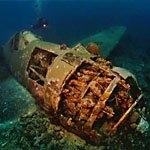
Photo: Peter
Lange |
|
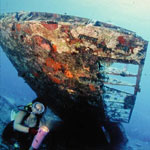
Photo: Michael
Cufer |
|
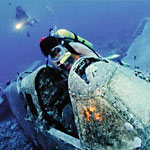
Photo: Michael
Cufer |
|
American Corsair
Fighter Plane
The pilot of this plane crashed
into the sea at great speed and the aircraft
is in five large pieces around
the 27 metre level. However the attraction is
not
only the wreck but the fantastic marine life
on or around it. The reef slope back to the
boat is interesting and has its own attraction
in
a bommie called clown fish city at the safety
stop level.
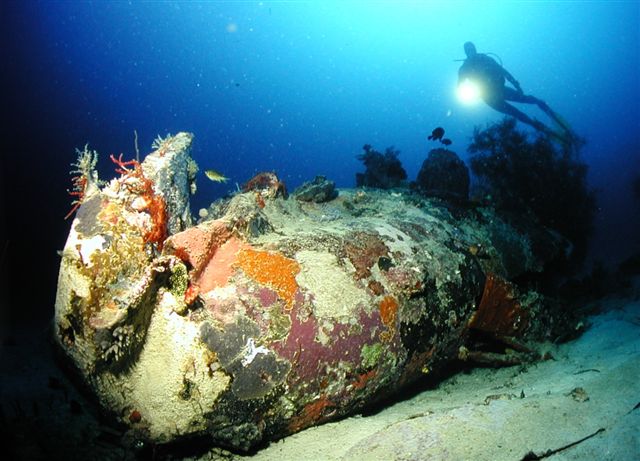
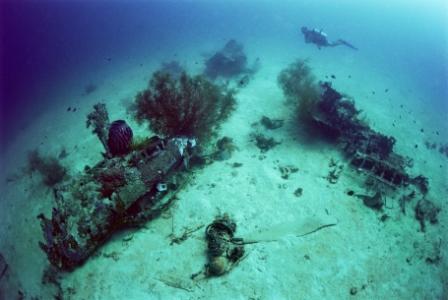
Photo by Peter Lange www.fotofish.at
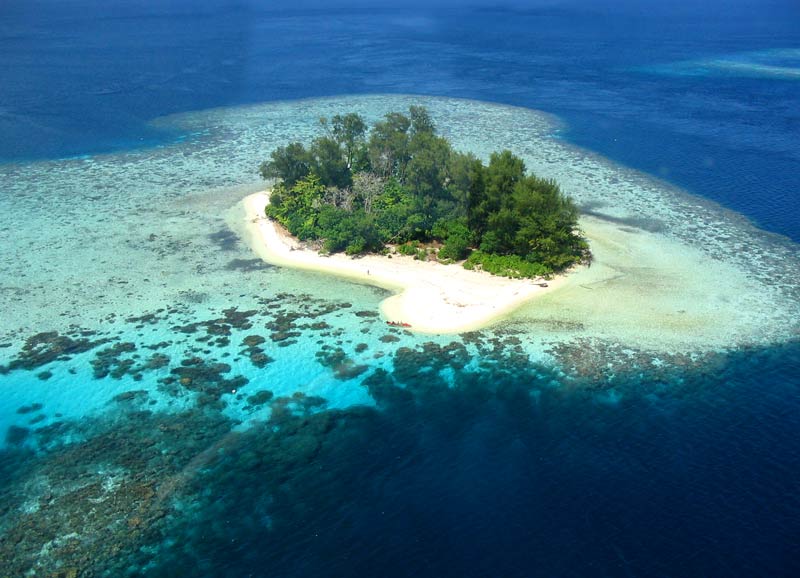
Plum Pudding
Island
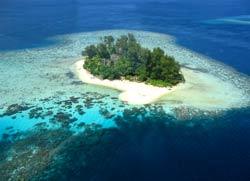
Or Kennedy Island as it is known as,
was named after the late US President who captained
the PT109 during the Pacific War. This dive
site offers shallow coral reefs for novice divers, and a drift dive on the opposite side. Open Water Diver training is conducted off the beach here, leading into a wonderful coral reef whith lots to find both snorkeling and diving.
 Kennedy
Island. Photo: MY
Meduse Crew
Kennedy
Island. Photo: MY
Meduse Crew |
The Manta Dive
An
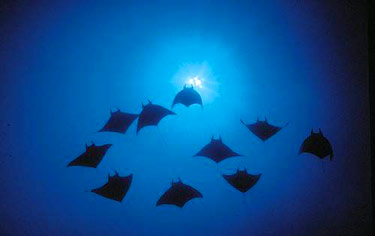
Adventure Sports Gizo exclusive, this site is
visited on request and if the time is right
then it's one show you wouldn't want to miss. With two different sites that are frequently visited by Mantas generally between November and April. Groups of up to twelve Mantas can be seen at once, and they are never too shy to come and check out a new dive group.l
 The Manta
Dive. Photo: Michael
Cufer
The Manta
Dive. Photo: Michael
Cufer |
The Beach Dive
For
the devoted drift divers this can clock up to
1.2 kilometres. Start at the beach and watch
the reef glide by on an armchair ride to a
coral reef delight. This dive starts by dropping over a ledge at 30 M, passing by large fan corals, and keeping an eye on the blue water for passing manta and eagle rays. It finishes by slowly climbing up the wall to find some nudibranchs as you finish your dive in the smooth lagoon.
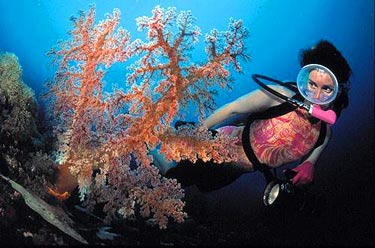 The Beach
Dive. Photo: Michael
Cufer
The Beach
Dive. Photo: Michael
Cufer |
The Gap
The
ultimate drift dive. Drop down on the outside
of Naru Wall and drift through the schools
of fish that welcome you into the Gizo lagoon.Well Know for its fish action! Commonly seen here are large schools of barracuda, big eyed trevally, reef sharks, and large schools of fish all together to feed in the currents. The Gap is covered with large sea fans and gorgonians, and starts off at 30 M, but divers still average one hour bottom times, as they glide along the wall and slowly ascend, ending the dive with a safety stop in the reef shallows.
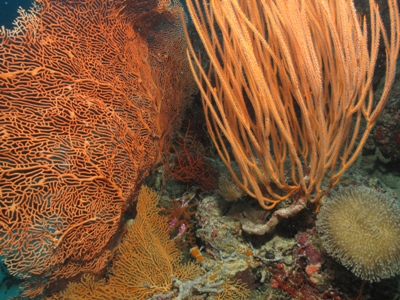
One Tree Island
This
dive site would have to be one of the most beautiful
reefs in the Gizo area. Multitudes
of hard and soft corals, large gorgonian sea
fans and multitudes of reef fish. What you might not have seen at the Gap my be waiting for you inside Gizo Lagoon here at One Tree.
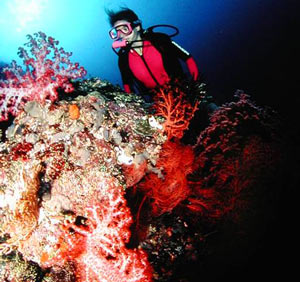 One Tree
Island. Photo: Norbert
Wu
One Tree
Island. Photo: Norbert
Wu |
Hot Spot
This
small pinnacle, one of our discoveries in 1995,
comes up to 5m from the oceans depths of 300-400m.
On the swing of the tide, pelagic's come into
feed on the shoals of bait fish that congregate
in and around this off-shore dive site. Following the earthquake and tsunami in 2007 we have lost many of our hard and soft corals on this site, but the fish have remained and always make for an interesting dive. Turtles frequent this site as they finish a long journey from the open sea looking for some fish friends to provide a gentle cleaning.
Japanese
Zero
Although not originally found in Gizo
Harbour, the plane still makes an interesting
dive with resident lion fish. On a clear day this can easily be seen from the boat laying in only 9 M of water.
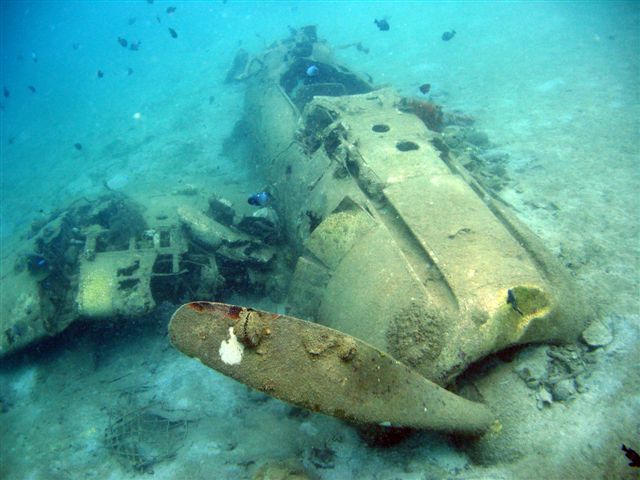 Japanese
Zero plane. Photo: Tina Aydon
Japanese
Zero plane. Photo: Tina Aydon |
Petaj
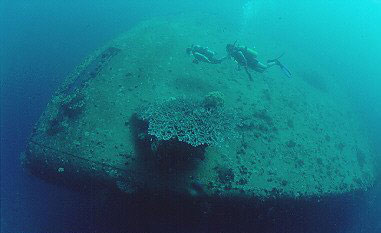
Originally commissioned as the coastal patrol boat ML 805
during WW11. She was purchased and sunk in front
of our dive shop as a 'house
reef' for the purpose of training dives and easy access to
night dives from the shore. Following the 2007 earthquake and tsunami, the wreck is now opened up but is still home to lion fish, schools of batfish, puffer and surrounded by anenomes on the sandy bottom.Following
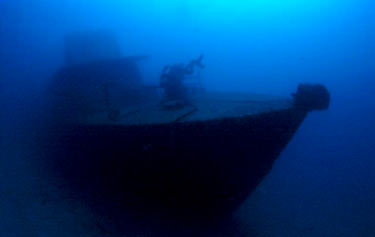 Photo's
of the wreck of Petaj.
Photo's
of the wreck of Petaj. |
|
| |
Yellow Corner
The
yellow corner is an extension of Naru Wall.
As you drift to the south along the wall, a large
knoll extends out into the
deeper water. This knoll is covered with small yellow soft corals.
Out of all the dive sites we dive, this is
the
only one that features these
iridescent
yellow corals. For the more experienced diver, when the current
is running. This dive provides a good contrast to the other reefs, with large groups of staghorn corals, and various other species growing here, as this reef is part of the barrier reef to Gizo.
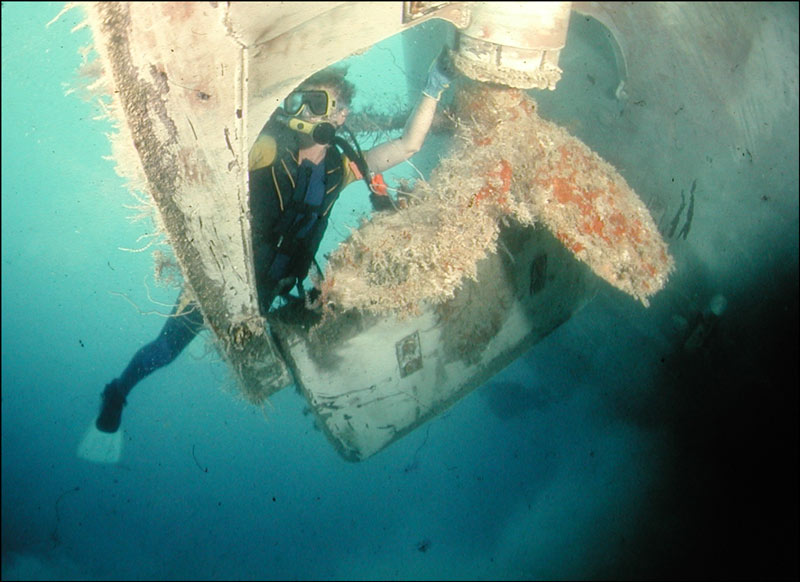
Tokyo Maru 11
Sunk in 1988 after hitting a reef entering
the Vona Vona Lagoon. This 100' Japanese tuna
fishing vessel is still completely intact with
propeller and all equipment on board. The dive
site is more advanced at 140', positioned mid
lagoon away from any reefs.